Chapter I
Joining the Expedition
Field notes from a lab that wants to know how brains improvise
Most research descriptions don’t end with an exclamation mark. The Koay Lab’s does: the lab says it aims “to have fun etching out trails into uncharted territory!” and recruits new members as “fellow adventurers”. I’m on this expedition as a Research Technician in the Koay Lab at the Howard Hughes Medical Institute’s Janelia Research Campus.
This chapter is a field guide to the lab: who’s in the party, what it’s looking for, and how it goes about looking. The next two chapters zoom in on the science.
The expedition party
The lab is small. Its members page lists five people:
| Role on the team | People |
|---|---|
| Group Leader (Sue Ann Koay) | 1 |
| Postdoctoral Scientist | 1 |
| Research Technician (I’m one of these) | 2 |
| Lab Administration Coordinator | 1 |
What the lab is looking for
In the lab’s own words: “We are fascinated by how brains learn and generate a seemingly vast spectrum of context-dependent behaviors on the fly, to survive in a complex and uncertain world.”
That adaptability, the lab says, relies on three core functions of the brain:
- Exploration, to form knowledge of the world’s structure.
- Strategic exploitation of the resources it has located.
- Inference of hidden contexts that may differentiate outwardly similar situations.
The lab studies all three in mice, using a virtual-reality framework to capture “the essence of the complex and heterogeneous scenarios that animals typically face when seeking rewards in naturalistic environments”. Chapter II goes into that maze.
How the lab goes about it
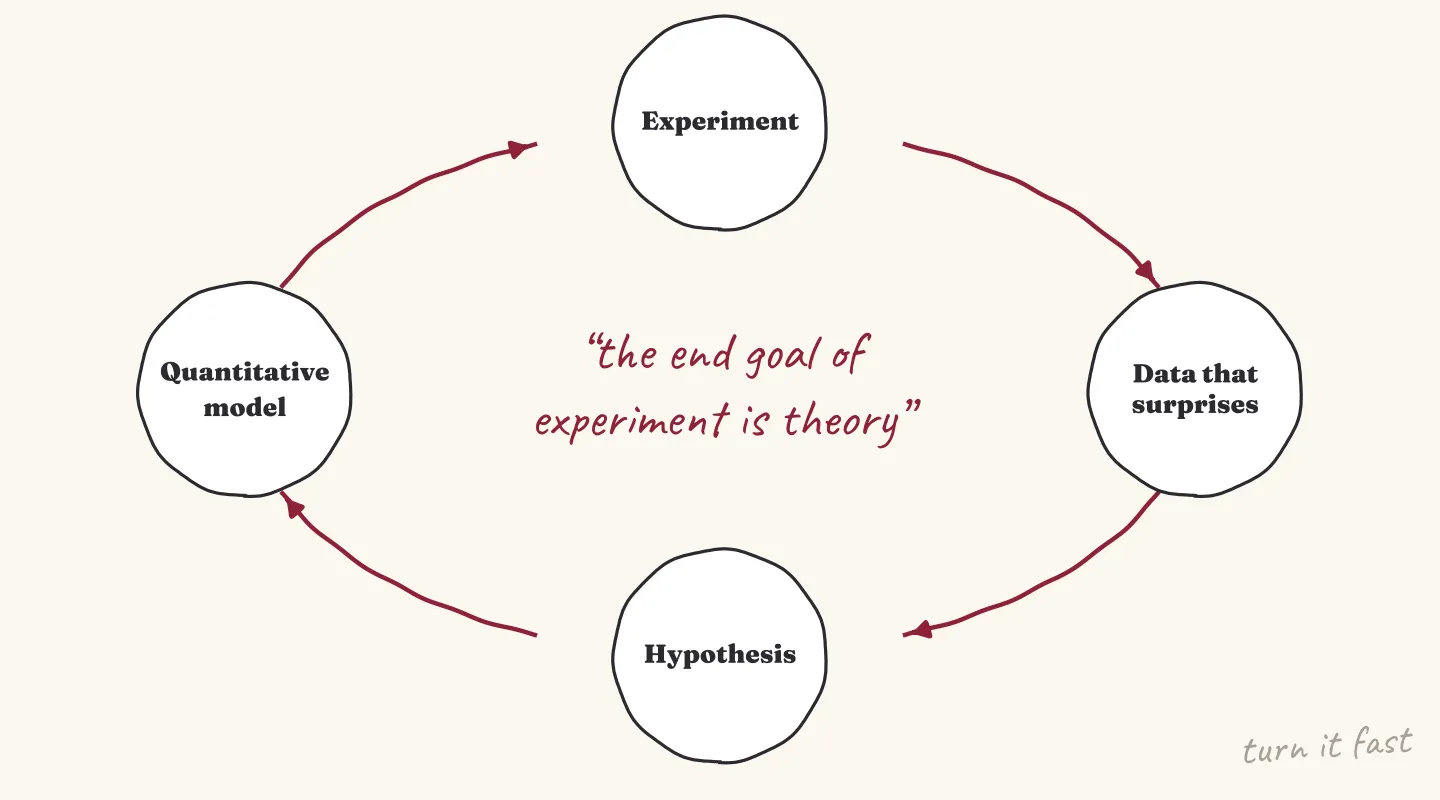
The lab sums up its philosophy in one line: “the end goal of experiment is theory”. Projects aim for a fast turnaround of the experiment–hypothesis loop, either within the lab or in tight collaboration with others, and quantitative models are how findings get pinned down “in a precise, falsifiable language”.
The lab also has a working picture of what the brain is, and it sounds more like software than biology. Chapter III unpacks it.
The lab keeps a standing invitation out for more fellow adventurers: postdoctoral scientists, and PhD students through the Johns Hopkins / Janelia graduate program or graduate research fellowship program. The lab’s page has the details.