Chapter II
A Maze With Many Right Answers
Why the lab lets mice explore freely in virtual reality
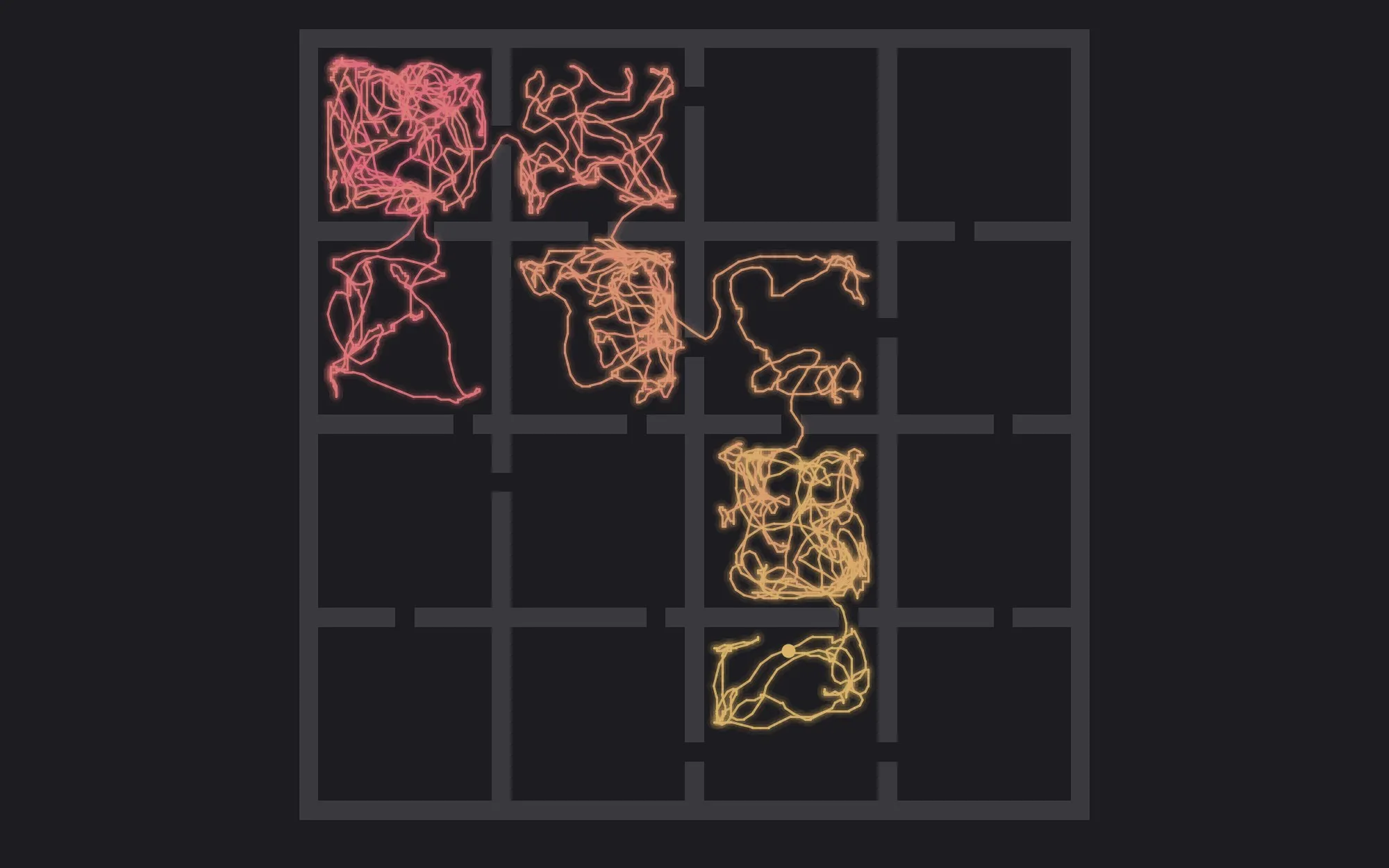
Ask a mouse to press a lever for a treat and there is one right answer. Drop a mouse into a big, complicated world and let it look for food, and there are hundreds. The Koay Lab, where I work, is interested in the second kind of problem.
Free-form behaviour
The lab calls these free-form cognitive behaviors: “behaviors that do not have strongly constrained task structures, but where many different ‘solutions’ can be found by animals to satisfy their internal drives.”
Spatial exploration is the classic example. In a rich environment there are many possible places to go next, “and each decision modifies the set of feasible choices in the future”. The lab studies it with free-form spatial exploration tasks for mice in virtual reality, which turns the world itself into something that can be designed.
Why random isn’t good enough
The catch, in the lab’s words: “In environments with more complex obstructed geometries, a blindly random strategy can be highly inefficient in covering space.”
That’s easy to see with a toy. Put a simulated explorer on a grid, let it step to a random neighbouring square each turn, and count how much of the space it has visited. Do it once in an open arena and once in a maze of sixteen rooms joined by narrow doorways:
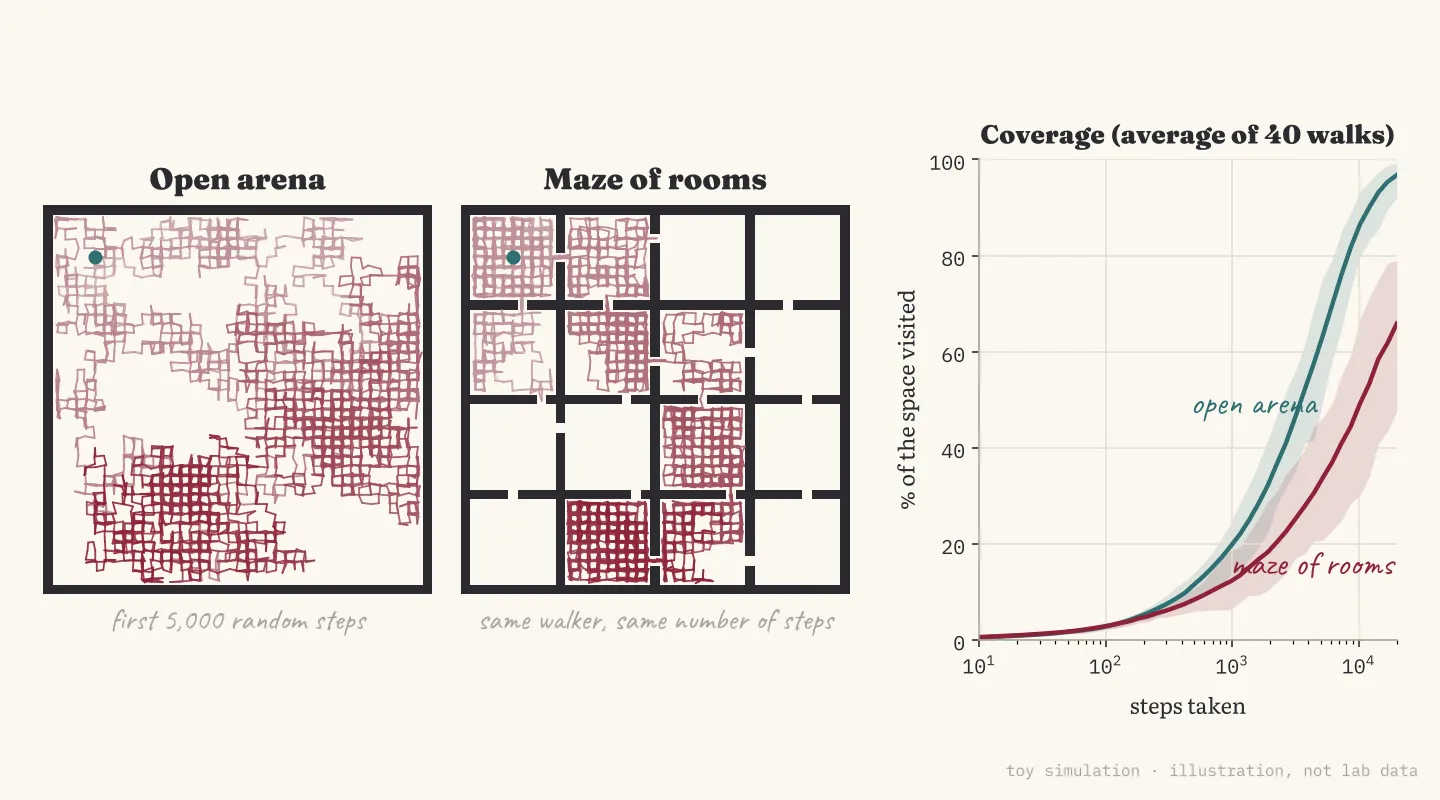
Coverage is just a fraction:
| After this many random steps | Open arena | Maze of rooms |
|---|---|---|
| 2,000 | 32% | 18% |
| 5,000 | 64% | 34% |
| 20,000 | 97% | 66% |
So the interesting question isn’t whether animals explore, but how. The lab wants to know “how animals can use knowledge gathered via exploration to modify the statistical distributions of their future exploration patterns”: in other words, how the walk stops being blind.
Three things a good explorer does
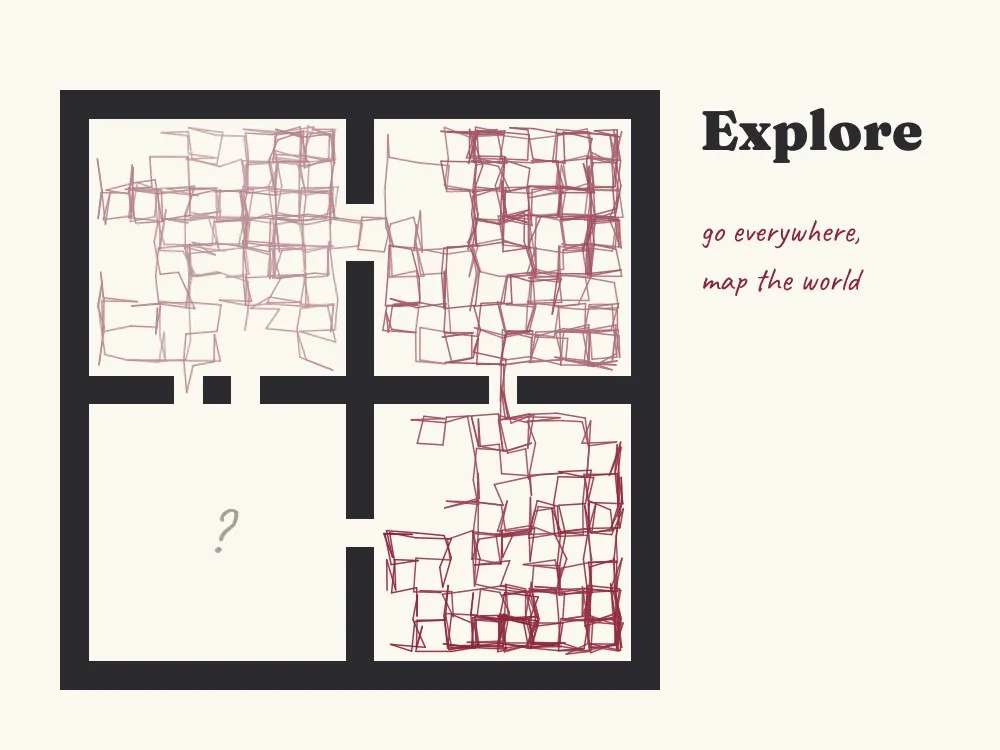
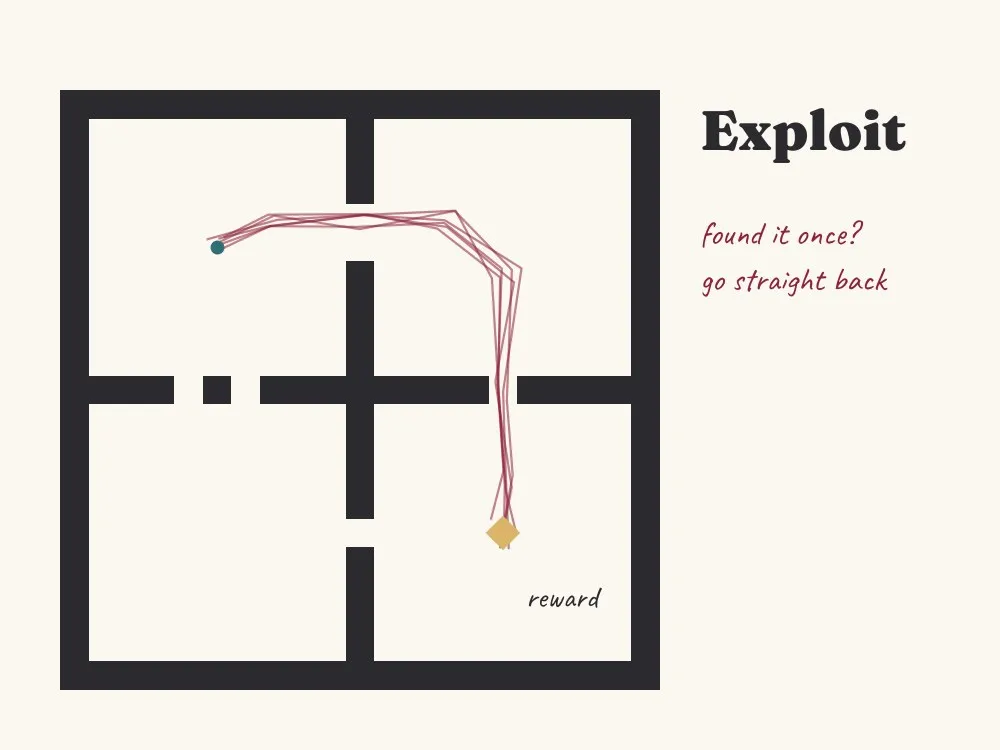
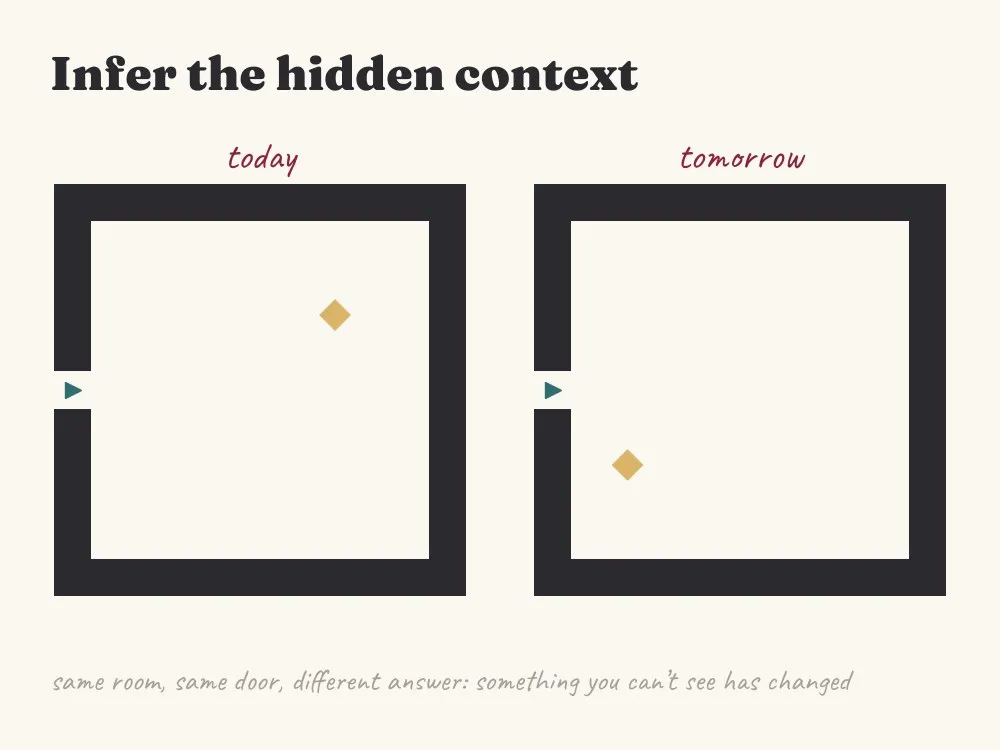
These are the three core functions the lab names: exploration to form knowledge of world structure, strategic exploitation of located resources, and inference of hidden contexts that may differentiate outwardly similar environmental conditions. The third is the subtle one: two situations can look identical from the outside, and the right move still depends on something you can’t see.